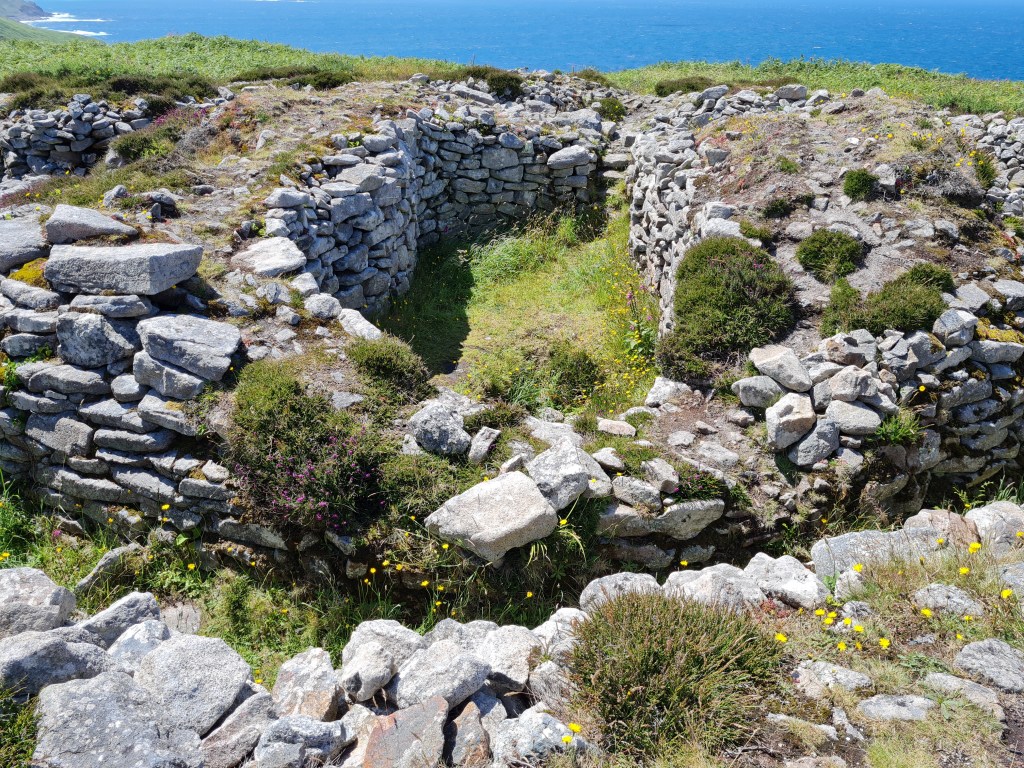
Walking from St. Just to the Cot Valley and Cape Cornwall
- The Ballowall Barrow (aka Carn Gluze), managed by the National Trust, is a clifftop complex of barrows and cists from different periods spanning the Neolithic and Bronze Ages. In 1878 William Borlase excavated it, making some changes to its original form. It was used for burials and rituals for centuries – a Roman coin was found in one of its cists. The barrow entrance faces southwest.
- St. Helen’s Oratory is perhaps as old as early Roman, but is at least early medieval. Not prehistoric, however I couldn’t resist mentioning its lovely ruins in the shelter of Cape Cornwall.
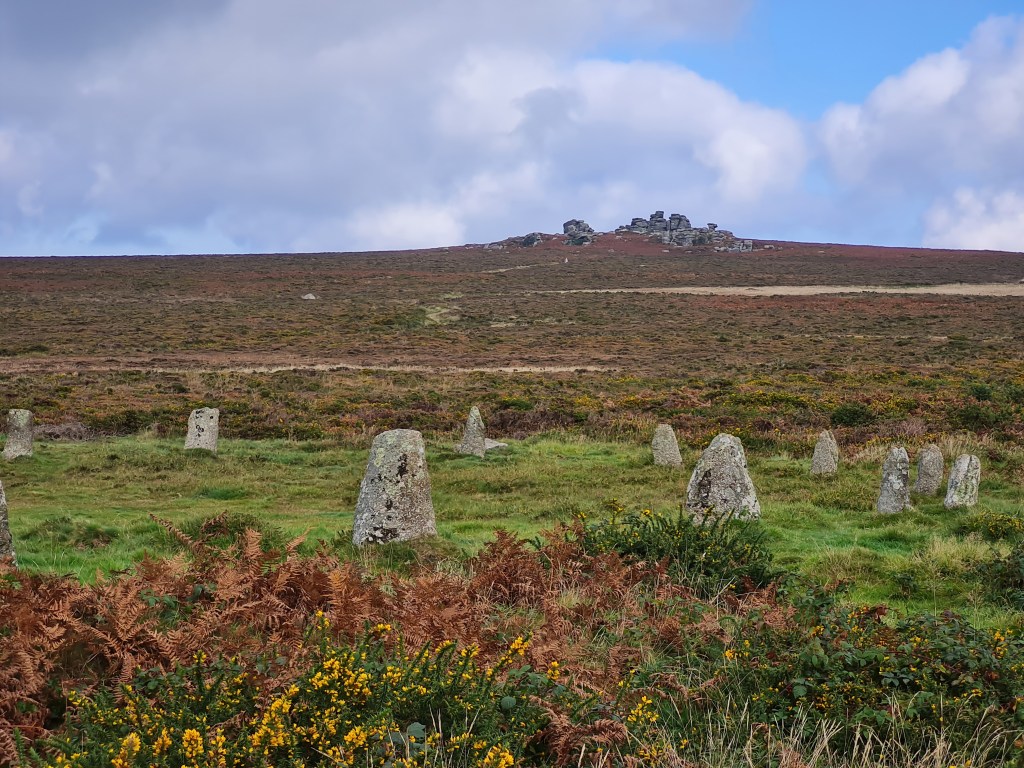
Walking from St. Just to Carn Kenidjack and back
- Tregeseal Stone Circle contains 19 stones and dates from late Neolithic/ early Bronze Age (approx. 2500-1500 BC). There were originally two stone circles at the site.
- Tregeseal/ Kenidjack Holed Stones are believed to be contemporary with the other Tregeseal monuments, but their function and purpose is unclear and some may have been re-erected or moved in living memory.
- Tregeseal Barrows were part of a funerary complex and probably held the remains of the people who built the stone circles. The two best preserved barrows are 40 feet and 46 feet in diameter and about 5 feet high. One has part of its kerb remaining and may have held a cist; the other has the remains of a stone chamber (likely entrance grave).
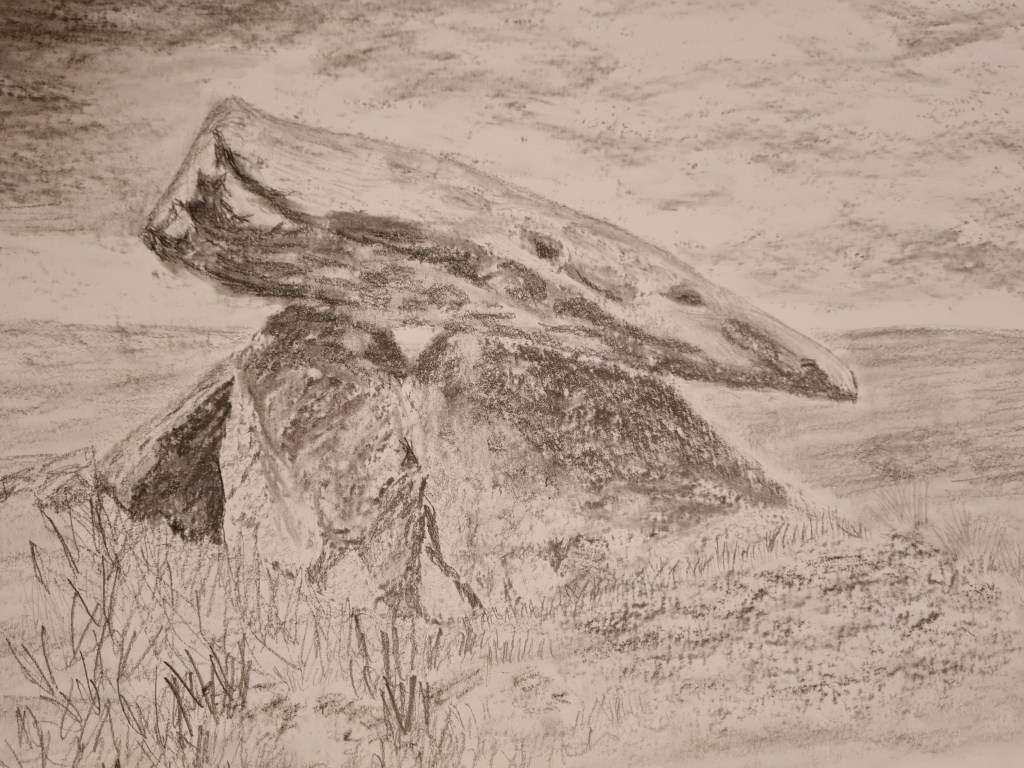
Bus to Pendeen, then a one mile walk up the “north road” to the start of the 2 ½ mile circular walk to Chun Castle
- Chun Quoit is the best-preserved of several west Penwith quoits (aka dolmens or cromlechs) that represent the earliest of any prehistoric monuments remaining, dating from early Neolithic (3500-2500 BC). They were likely repositories for the bones of the dead, but also places where the living would go to consult with the spirits of their dead ancestors.
- Chun Castle is an Iron Age hillfort with several roundhouses and a well surrounded by two stone walls. It was occupied from the 3rd to 1st centuries BC.
- Bosullow Trehyllys is a courtyard house settlement dating from the Romano-British perior (2nd – 4th C AD), a type of building only found in west Penwith and the Isles of Scilly. It’s well-preserved and includes the remains of houses, paddocks, and gardens, but is on private land. A good portion is visible from the lane, but the landowner is also happy to give permission.
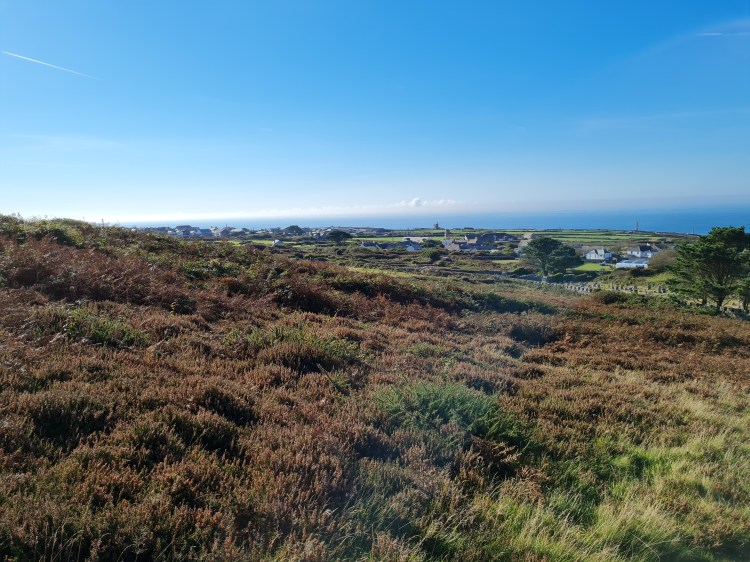
Bus to Boscaswell (the A17 from St. Just toward St. Ives) and then a 3 mile circular walk that includes Pendeen Watch (the lighthouse) and cliff-top views on the South-West Coastal Path
- The walk includes two late Iron Age (about 500 BC) fogous. A fogou (Cornish for cave) is a stone lined and roofed passage, sometime below and sometimes above ground. Their purpose is unknown, perhaps storage or shelter, or perhaps ritual. They were built aligned to specific sunsets or sunrises, and may also align with nearby tin lodes.
- Lower Boscaswell Fogou is an above-ground fogou built into the stone walled remains of an adjacent settlement.
- Pendeen Vau Fogou is on private land. It was first excavated by William Borlase in the 18th C (this was his farm) and even recently has been found to be in exceptionally good condition. There are two passages lined with dry stone walling and roofed with granite capstones, and an additional 20 foot unlined passageway.

Bus to Morvah, then 1 ½ mile walk to the beginning of a 3 mile circular walk
- Men-an-Tol is a holed stone with two upright stones in the remains of a stone circle. It dates from late Neolithic/ early Bronze Age (2500-1500 BC) and would have been used for ritual and ceremonial purposes.
- Men Scryfa is a 6 foot Bronze Age standing stone with a late Iron Age/ Celtic (5th – 6th C AD) inscription in Latinised Cornish. The inscription translated as “Royal Raven, Son of Famous Leader” suggests it became a memorial stone to the son of a tribal leader whose name was taken from Bran, a mythic Celtic chieftain from the Welsh saga The Mabinogi.
- Nine Maidens Stone Circle, or Boskednan Nine Maidens, has 11 stones left from the probably 19 original stones. The Bronze Age site was disturbed by Ding Dong mine workings, but included additional standing stones and barrows.
- Lanyon Quoit is originally early Neolithic (3500-2500 BC) but collapsed in an 1815 storm and was incompetently re-erected at right angles to its prior position. As a result its 17 ½ by 9 foot capstone rests on three shortened and squared off uprights instead of four. It originally stood at the northern end of a large burial mound whose outline is still visible.
- Bosillack Barrow is a Neoloithic (3000-2500 BC) entrance grave. The entrance passage faced the winter solstice sunrise, similarly to the Irish Newgrange.
 Flat Two